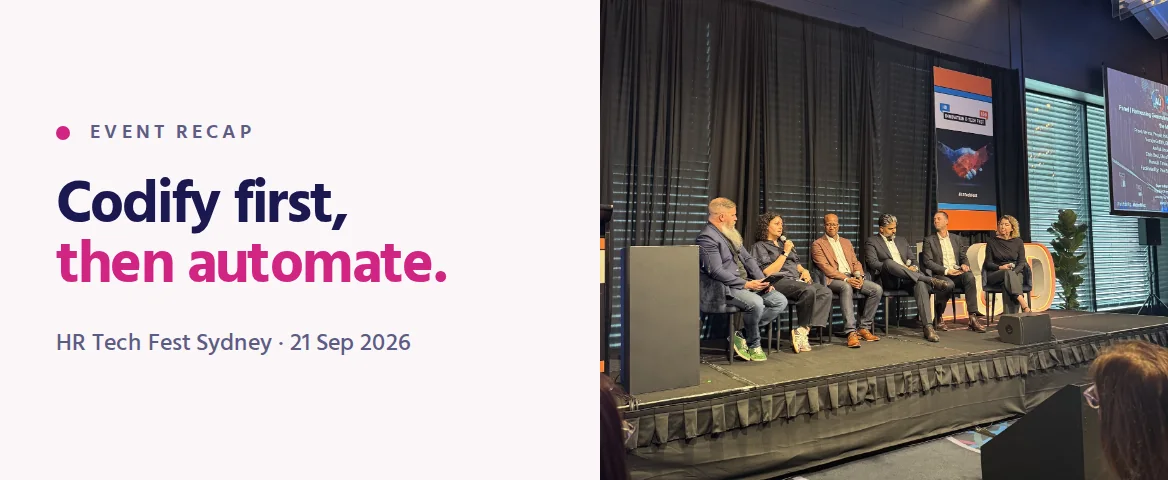

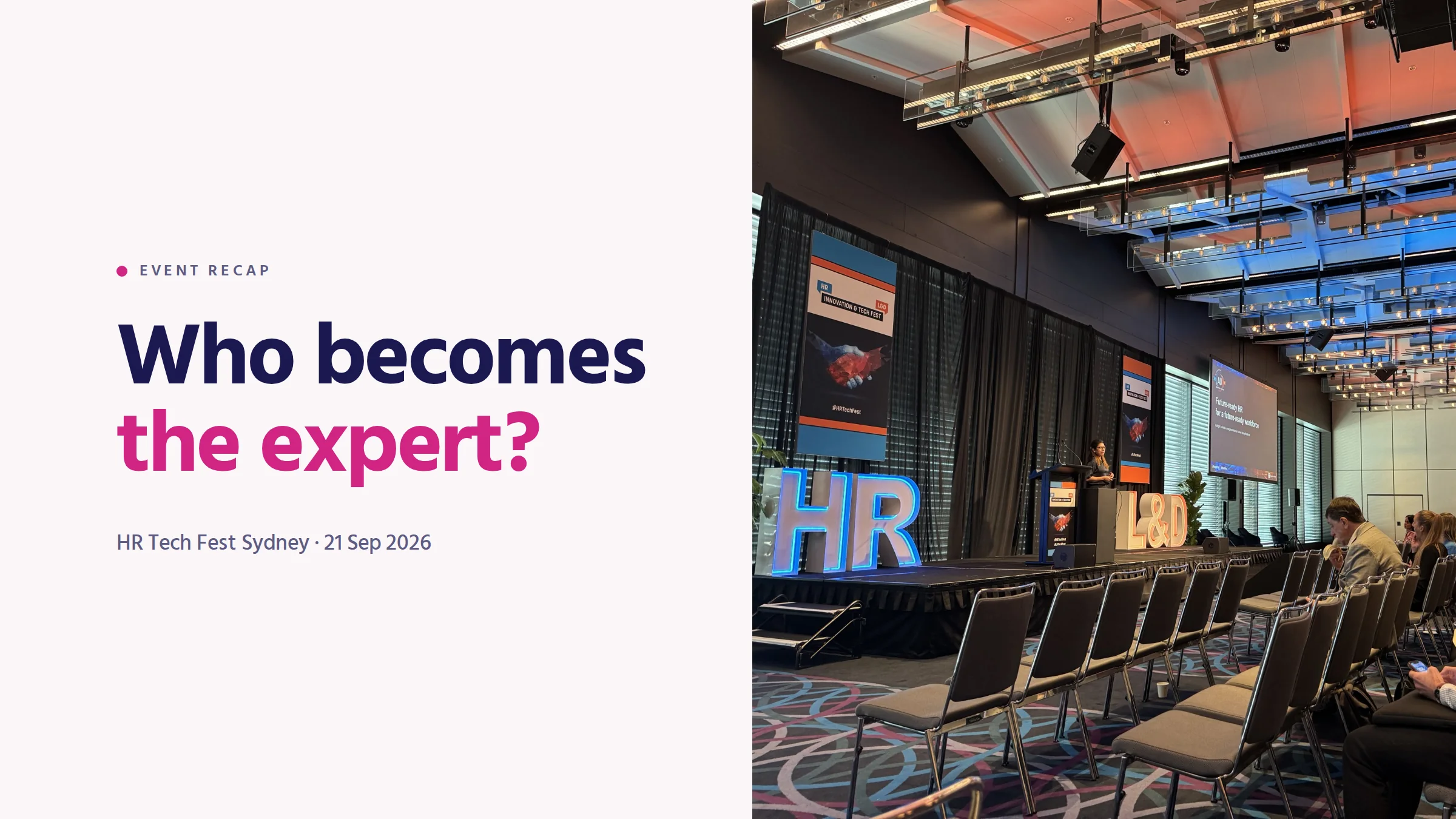
The best moment of the fireside chat on the AI adoption gap at HR Tech Fest in Sydney, with Emily Zhang of The HumAIn Impact and Bobby Becker of HiBob, came from the audience.
A remuneration specialist with around 30 years in the field described how she learned her craft: through the boring hands-on work of scouring data. Now she can look at a spreadsheet and know by feel that there's an error, and roughly where it is. Her question was what happens in 15 years, when graduates have never done that groundwork. They trust whatever the tool puts on screen. She'd already had junior staff hand her an answer and, when asked how they got there, say the AI did it. As she put it, you can't stand in front of a board and say that.
Nobody on stage had a clean answer. That's why it's worth taking seriously.
Bobby Becker shared an example from an HR lecturer he works with, who received 20 identical essays: same company, same strategies. Her university now assesses the prompt a student used and asks them to explain it, rather than marking the output. The specialist pushed back: does that mean we're only teaching people how to use AI, not the discipline itself?
Another voice argued the opposite. The education system hasn't changed much since the industrial revolution, and interrogating AI output may produce more critical thinking, not less. It depends on assessment moving towards oral questioning, where people have to explain what they did.
Emily Zhang's central phrase was "humans in the lead," not just in the loop. Quality control has to be built into the workflow as a real checkpoint, with a person accountable for the result. The panel later that afternoon said something similar: enduring human capabilities like judgement, critical thinking and discernment of quality matter more now, not less.
This question shapes how we think about Nooma, the AI practice companion Castle designed and built with O-HR for HR professionals at different career stages, from early career through to senior leaders. A tool that hands a junior practitioner a finished answer makes them faster and no better. A tool that walks them through the steps of a proper process, and makes them own the decision at the points that matter, builds the judgement the remuneration specialist was worried about losing. See how we built it.
The groundwork doesn't have to disappear. It has to become the part where people learn, rather than the part AI quietly skips.
The specialist's final line was the right one: genuine intelligence beats artificial intelligence for people who can already see around corners. The job is making sure the next generation learns to see them too.
If you're building AI into specialist work of your own, here's how we approach it. For HR practitioners, Nooma launches to founding members soon: join the waitlist.
Book a free 30-minute call. We'll talk through what you're working on, what we'd do, and whether we should partner. No pitch deck, no PDF brochure.

Software that holds up under real use.

© 2026 Castle Digital Pty Ltd. All rights reserved.