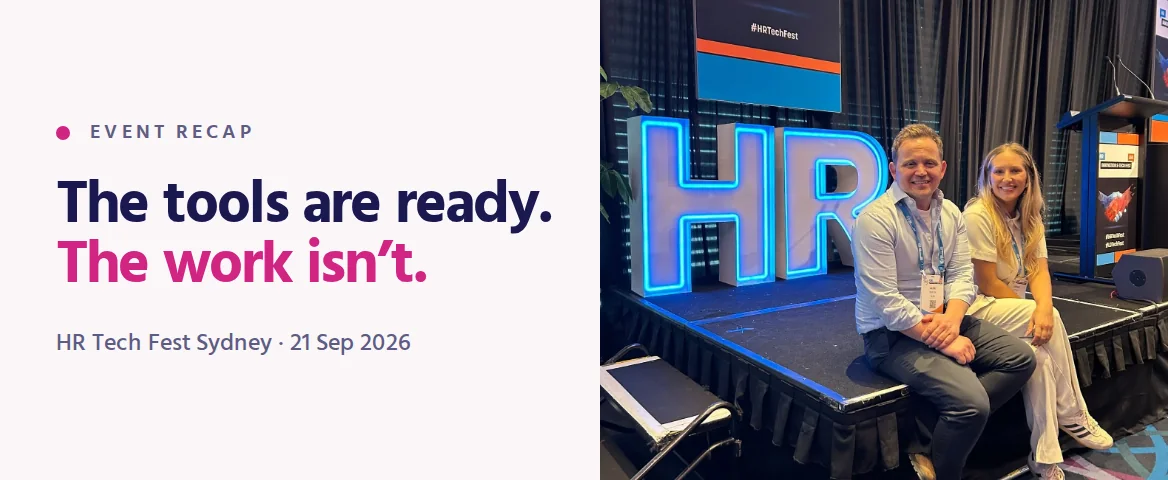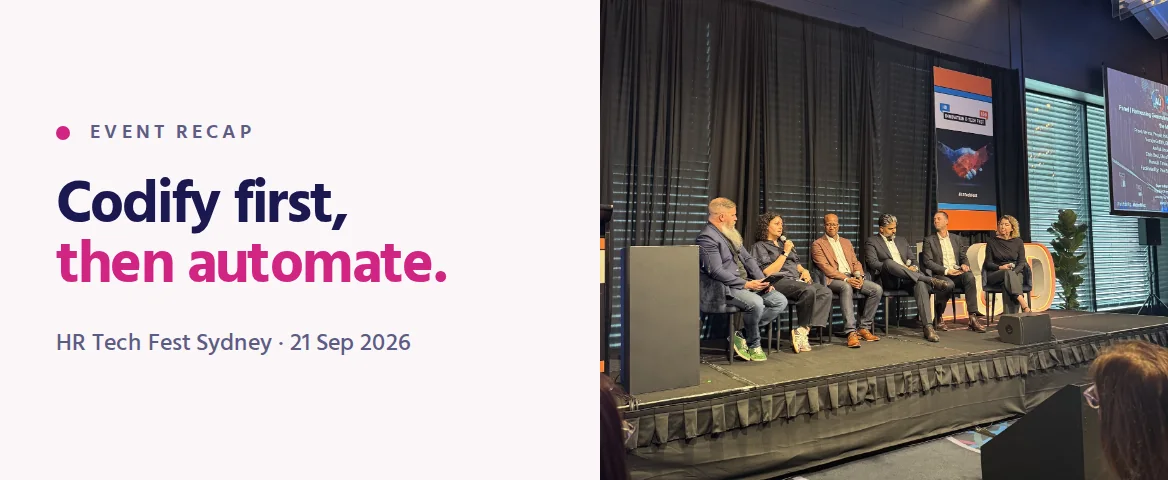

Nidhi Chopra, Director and HRBP Lead APAC at Adobe, opened her HR Tech Fest session with an argument that echoed through the whole day. You can train every employee to use AI well, and they'll still sink back into processes that were never built for it. HR's processes are a big part of the problem: they're stuck in documents and policies that can't move at the pace the business now expects.
She named four pressures behind Adobe's approach:
Adobe's answer was built on its own product, Acrobat PDF Spaces. The principle behind it holds whatever tool you use: give AI a controlled, current set of sources and have it answer only from those.
Senior leader onboarding. Onboarding packs used to be handed over on day one and were out of date by the time leaders needed them. Adobe moved everything into one shared space: slides, PDFs and SharePoint links. Operations, finance and chiefs of staff keep it current. An AI assistant answers leaders' questions from that space, not the open web, and leaders can listen to documents as a short audio summary instead of reading them. Leaders felt less overwhelmed, and HR spent less time in reactive meetings.
Change management at scale. A 70-person team building a hub for Tier 0 and Tier 1 HR queries had the familiar problem: people went to training, then couldn't find the information when they needed it. A living knowledge base with an assistant drawing only on approved documents meant everyone got the same answer from the same source, without rewatching recordings or digging through long documents.
Strategy communication. Ahead of a workshop in Japan, Nidhi needed teams to absorb the business strategy in advance so the session could focus on cascading goals. She generated audio from the strategy document, used Claude to turn the script into a two-person interview, and produced an animated video from it. Employees could read, listen or watch. A day later, the team could recall the three strategic bets clearly.
Most AI use cases can tolerate a creative answer. HR can't. A confident, wrong answer about leave entitlements or a disciplinary process can create a real liability. That's why the detail that mattered most in Adobe's examples wasn't the audio or the video. It was that the AI answered only from sources someone had approved and could point to.
That standard shapes Nooma, the AI practice companion Castle designed and built with O-HR. An HR practitioner has to be able to stand behind every output, so it needs to come from sources they can check, inside a workflow built for the job. Literacy gets people to the tool. The workflow underneath is what makes the answer usable. See how we built it.
If you're building AI into specialist work of your own, here's how we approach it. For HR practitioners, Nooma launches to founding members soon: join the waitlist.
Book a free 30-minute call. We'll talk through what you're working on, what we'd do, and whether we should partner. No pitch deck, no PDF brochure.

Software that holds up under real use.

© 2026 Castle Digital Pty Ltd. All rights reserved.