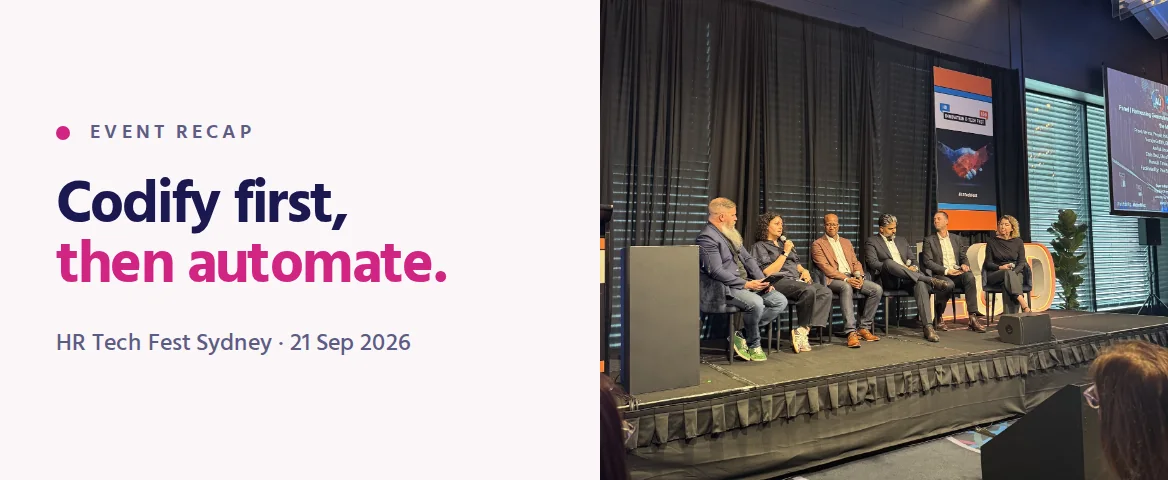

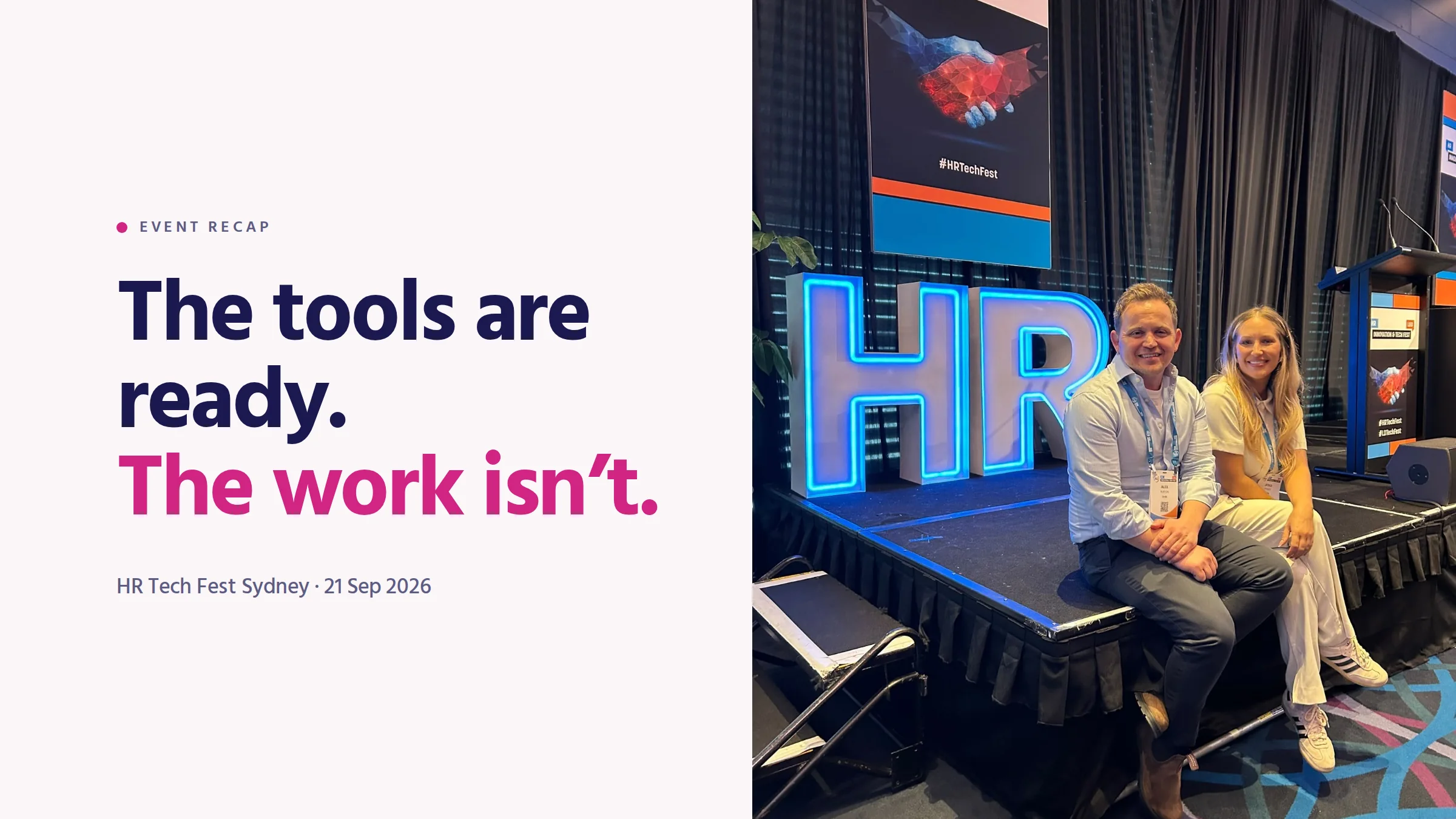
Almost every session at HR Tech Fest in Sydney on 21 September was about AI. The day included a keynote from One NZ, a session from Adobe's Nidhi Chopra, a fireside chat with Emily Zhang of The HumAIn Impact and Bobby Becker of HiBob, and a panel with Atlassian, CBRE, Anglicare, Loan Market Group and Latitude Financial. One pattern held across all of them: access to tools isn't the problem any more. Changing how the work gets done is.
One NZ gave AI tools to all 2,500 staff and logged close to 5,000 learning completions in six months, and team processes barely moved. Adobe's Nidhi Chopra made the same point directly: AI-literate employees still sink into processes that weren't built for AI. Bobby Becker cited Gartner's view that adoption follows confidence, not training volume. The panel's advice was to skip broad programs and pick three to five high-friction use cases.
Adobe's AI assistants answer only from approved, current documents, not the open web. Loan Market Group's policy agent gives staff a direct answer instead of an eight-page PDF. The panel's first rule was that AI can't use what it can't see: codify your knowledge first.
Emily Zhang argued for "humans in the lead," not just in the loop. One NZ assesses tasks individually to decide what stays human. Latitude Financial keeps a human fallback on AI-guided review conversations. Atlassian's Avoid, Automate, Augment, Elevate framework puts the human work at the top.
AI changes faster than any policy can be updated. Emily Zhang recommended a short set of principles tied to company values. One NZ built an AI Confidence Agent anyone can ask whether an idea is safe to pursue. The panel said to build governance in early, and Loan Market Group gave everyone access first, then applied guardrails.
CBRE's Chief People Officer is one of its top AI users. At One NZ, senior leaders' AI goals are tied to short-term incentives. Emily Zhang described a law firm where adoption took off after a partner wrote a newsletter about how they used AI themselves.
One NZ's People and Culture team shares KPIs with its AI and data team. Anglicare's CHRO now runs IT, brand and shared services. The panel was blunt that tech capability is no longer optional for HR.
A remuneration specialist asked where expert judgement will come from when graduates never do the groundwork. It was the most honest moment of the day, and it's still open.
Every example on the day came from an organisation with an AI and data team, an L&D function or a transformation budget. Most Australian HR practitioners have none of that: a solo HR manager, a small team, or a business owner doing HR alongside everything else.
That's who Nooma is for. Castle designed and built it with O-HR, and it carries the codified workflows, grounded answers, human decision points and built-in guardrails that large organisations assemble around their people teams, for the practitioner working largely on their own. See how we built it.
If you're building AI into specialist work of your own, here's how we approach it. For HR practitioners, Nooma launches to founding members soon: join the waitlist.
Book a free 30-minute call. We'll talk through what you're working on, what we'd do, and whether we should partner. No pitch deck, no PDF brochure.

Software that holds up under real use.

© 2026 Castle Digital Pty Ltd. All rights reserved.