
Part of our guide to moving beyond no-code
Your no-code MVP just hit its limit. Performance hiccups, scaling headaches, security gaps. You’ve seen them all. Now comes the real question: custom software vs off-the-shelf? This guide cuts through the noise and gives you a clear playbook to choose build, buy, or a staged hybrid when no-code breaks down.
Choosing between custom software and off-the-shelf solutions can feel like a maze. Each option has its own perks and pitfalls. Let's dig into the challenges you face with no-code and why this decision matters now.
No-code platforms like Bubble or Glide are perfect for getting off the ground. They're fast and cost-effective. But as your user base grows, so do the problems. Suddenly, load times drag, and feature expansions become nightmares. The reality is these platforms have limits. Once you hit them, your MVP can become a bottleneck rather than a springboard.
Why does this happen? It's simple: no-code tools are designed for speed, not scale. They work wonders for validation, but when real growth kicks in, they often falter. High traffic, complex processes, or multiple integrations can expose these weaknesses. The longer you wait to address this, the harder it becomes to maintain your momentum.
Technical debt isn't just a buzzword; it's a silent growth killer. You might have overlooked it in the race to launch, but no-code debt accumulates quickly. Every hack or workaround you used to get the MVP up and running now needs reevaluation. This debt can slow your progress in unexpected ways.
Consider the shortcuts you took to build features quickly. They're now liabilities, causing slowdowns and bugs. Fixing these issues often requires more work than starting fresh. It's like patching a sinking ship: effective short-term, but risky long-term. Recognising technical debt early can save time and resources, allowing you to refocus on growth and innovation.
Thinking of moving off Bubble? You're not alone. Many startups face this challenge. The migration process isn't just about shifting data; it's about evolving your entire product strategy. It's a chance to reassess and refine your architecture. Consider the benefits of custom solutions that precisely fit your needs.
Migration requires careful planning. You'll need to evaluate your current setup, identify what works, and what doesn't. A structured approach can minimise disruptions and maximise gains. Remember, you're not just transferring a product; you're setting the foundation for future scalability and success.
Now that we've outlined the challenges, let's explore how to make the right choice between building custom software or buying off-the-shelf solutions. This framework will guide you through the decision process with clarity and confidence.
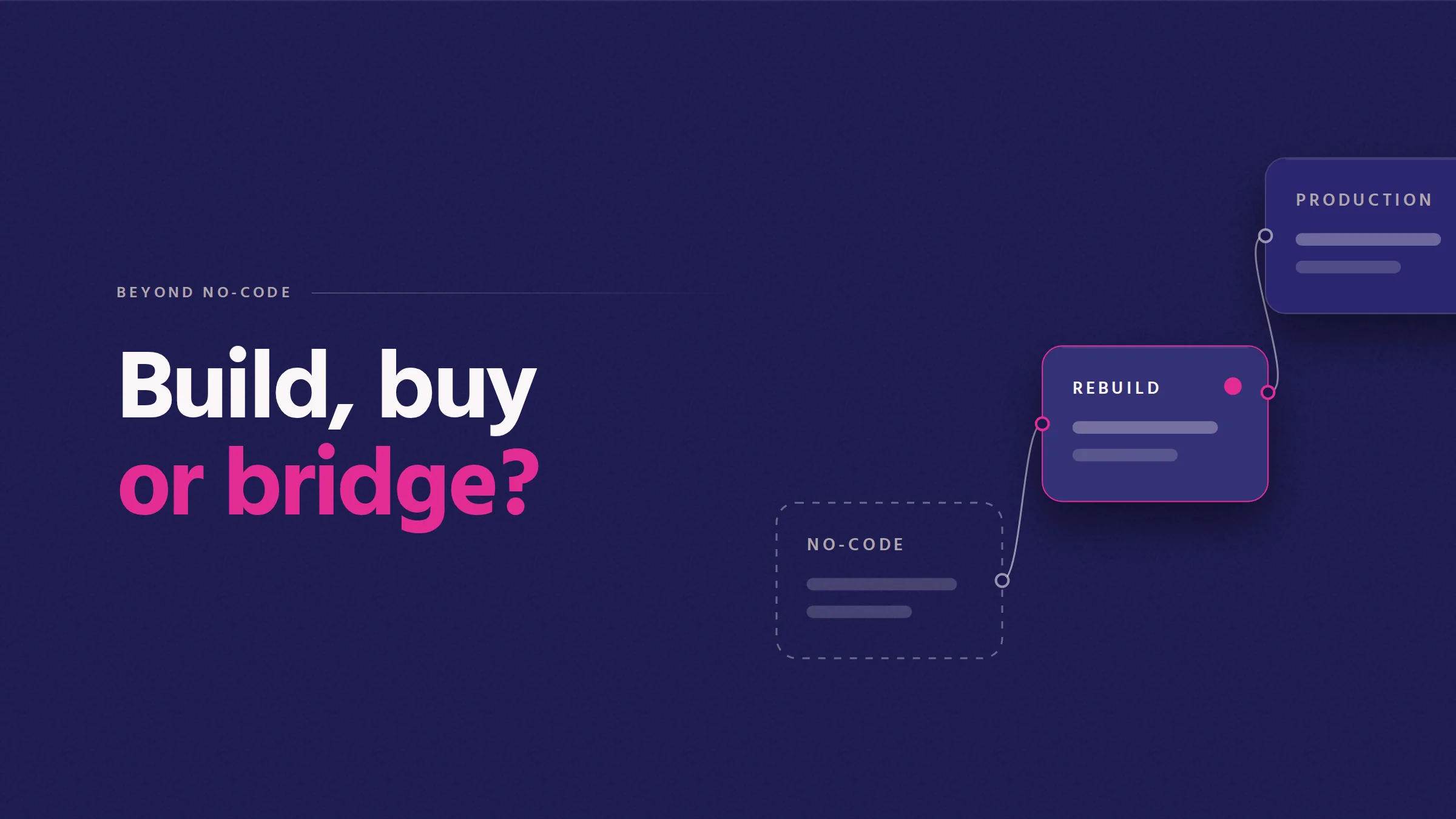
As a founder, your decision impacts everything: budget, team and timelines. Start by listing your priorities. What do you need now, and what can wait? Building custom software offers flexibility and control. It's tailored to your specific needs, but it demands time and investment.
Off-the-shelf solutions are quicker to deploy. They provide a proven foundation, often at a lower upfront cost. But they come with limitations. You may need to adapt your processes to fit the software, which can be cumbersome. Weigh these factors carefully. Your choice should align with your overall vision and roadmap.
Transitioning from no-code to a production environment is a leap. It requires strategic thinking and tactical execution. Start by identifying core features. What must stay, and what can go? Simplifying your product can enhance performance and user experience.
Next, plan your tech stack. Choose technologies that support your growth goals. Engage with developers who understand both your vision and the technical nuances required. This partnership can make the transition smoother, ensuring that you glide into production with confidence and clarity.
It's easy to get frustrated with limitations, but they can also be opportunities. Each constraint forces you to innovate and improve. Embrace this mindset and seek solutions that turn limitations into strengths. Often, the most creative ideas come from working within constraints.
Look for strategic partners who share your vision. They can offer fresh perspectives and solutions you hadn't considered. Remember, you're not in this alone. Collaborating with the right experts can help you navigate challenges and capitalise on opportunities effectively.
Having explored the decision framework, let's delve into strategies that take you beyond no-code. These insights will help you transition smoothly and set your product up for sustained growth.
Moving from MVP to a full-fledged product is a critical step. Start with a clear roadmap. Outline the phases of development and set achievable milestones. This keeps your team focused and aligned. Prioritise features that deliver the most value to your users.
Test continuously. Use feedback loops to refine your product and address issues early. This iterative approach ensures that your final product is robust and user-friendly. Remember, the goal is to create a product that not only works but delights your users.
Not every startup can afford a full-time CTO. That's where fractional CTO services come in. You get access to experienced tech leadership without the hefty price tag. This support is invaluable in guiding technical decisions and avoiding pitfalls.
A fractional CTO can help you align your technology with your business goals, ensuring that every decision supports your long-term success. Many startups have benefited from this model, gaining strategic insights and technical expertise without breaking the bank.
If you are leaning towards a build, read the real cost to build and scale your app in Australia first. If you are not yet sure you need one, our rebuild or patch checklist helps you decide.
Before you commit budget to a rebuild, get the scope right. Strategy & Audit is a fixed-scope review of your product, architecture and roadmap, and it ends with a written plan you keep. If you want a quick sense check first, book a free 30-minute call.
Book a free 30-minute call. We'll talk through what you're working on, what we'd do, and whether we should partner. No pitch deck, no PDF brochure.

Software that holds up under real use.

© 2026 Castle Digital Pty Ltd. All rights reserved.