
Part of our guide to moving beyond no-code
Your MVP worked well to get you here. Now it’s showing its limits: slow performance, rising costs, and features that stall your growth. Knowing when to patch and when to rebuild your MVP can save you time and money. This checklist will help you spot the signs that your no-code build on Bubble, Glide, or Lovable has hit the ceiling and needs a proper MVP rebuild. Martin Fowler’s explanation of technical debt is the classic reference.
Spotting the moment your MVP hits its ceiling is crucial. You might feel the pressure of slow performance or costs stacking up. Let’s dig into the signs that might indicate a need for a rebuild.
Your MVP got you off the ground, but now you notice it's struggling to keep up. Maybe you're seeing longer load times or users facing crashes during peak hours. These are red flags that you've outgrown your current setup. Another sign is when adding new features becomes a nightmare, taking too long or not working as planned.
Think about your user feedback: are your customers asking for things you can't deliver? If integrating with other tools feels impossible, you're likely facing limitations. It's common to feel these pains as your user base expands, but they're clear indicators that a rebuild might be necessary. Don't wait too long, as these issues can hinder growth and scare off potential investors.
Performance bottlenecks can suffocate your app's potential. When your app slows down, users notice. Every millisecond counts. Beyond user experience, there's the matter of cost. Operating an MVP with rising expenses cuts into your margins and burns cash.
Unit economics matter too. If you’re spending more to keep things running than you’re earning, that’s a big problem. This is where a rebuild can save the day. By addressing these issues, you position your product for scalable growth, ensuring every dollar spent works harder for you.
Product velocity is your app's ability to ship updates quickly. If each new feature feels like dragging a stone uphill, you might need to reconsider your approach. Those initial shortcuts you took? They're accumulating into tech debt.
Tech debt is the sneaky cost that grows when you cut corners early on. It slows down development, making your team sluggish and frustrated. Recognising this debt is the first step. A rebuild can clear the slate, setting up your product for faster, more efficient updates.
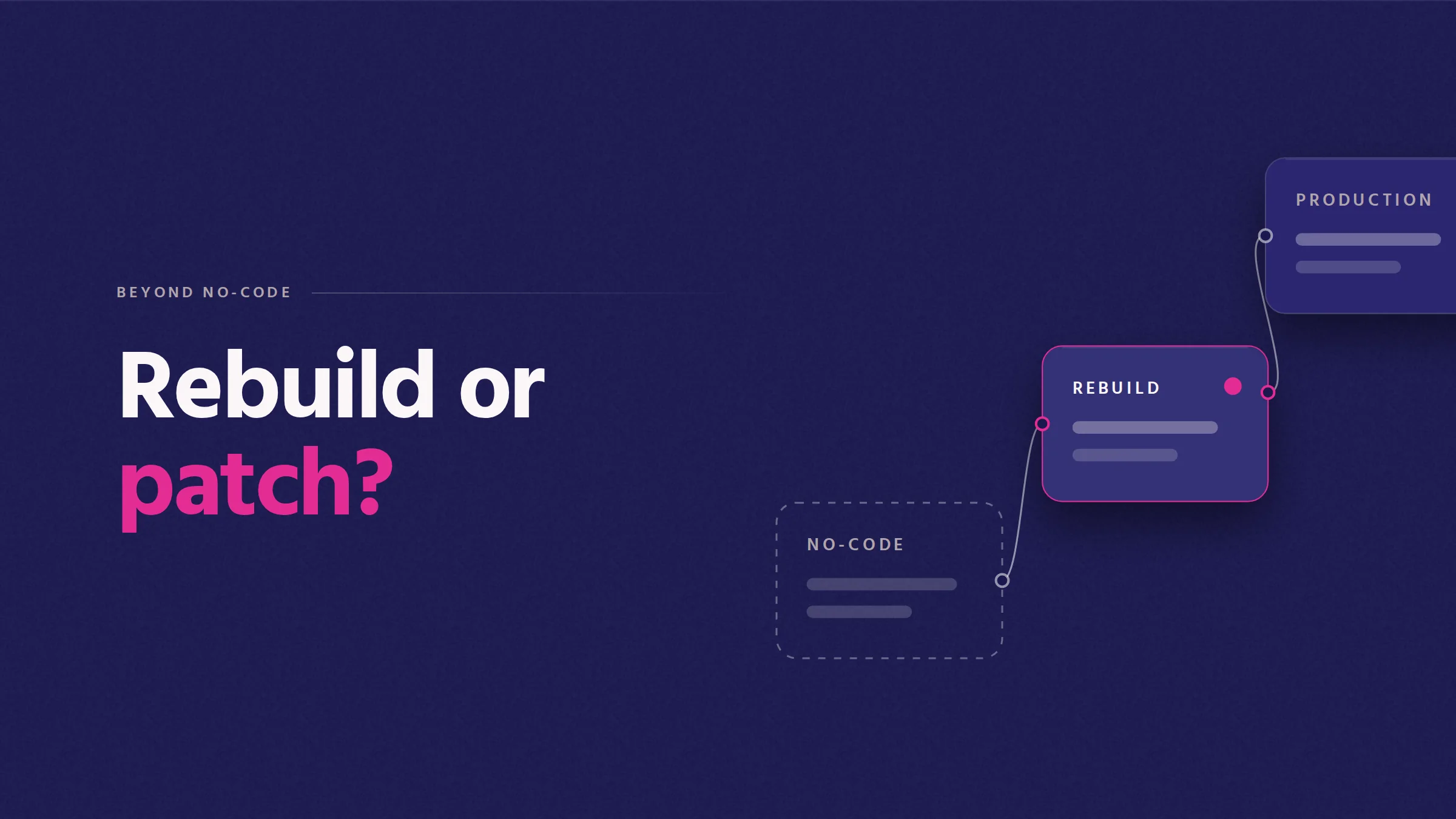
Choosing between patching and rebuilding isn't easy. Patching seems quicker and cheaper at first glance. But is it the best in the long run? Let's weigh the options.
Vendor lock-in can become a significant issue. If your MVP relies heavily on a particular no-code platform, you might find it hard to switch later. This limits your flexibility and might cause problems if the vendor changes their terms or pricing.
Security is another critical concern. As your app grows, so does the risk of data breaches or hacks. Patching might cover the cracks temporarily, but it doesn’t address the underlying vulnerabilities. A rebuild can incorporate robust security measures from the start, protecting your users and your reputation.
Patching is like putting a band-aid on a broken leg. It’s a temporary fix, often leading to more significant issues down the line. Rebuilding, on the other hand, involves upfront costs but saves money in the long term.
Think of it this way: if patching costs keep climbing, a rebuild might be more economical over time. It allows you to build with scalability and efficiency in mind, potentially reducing operational costs and attracting new users with improved performance.
Platforms like Glide are fantastic for initial builds. But they come with limitations as your app scales. You might hit walls that prevent you from adding necessary features. Similarly, moving from Bubble to a production-ready environment isn’t always straightforward.
These platforms are great for MVPs but can become a hindrance as you grow. Recognising this early allows you to plan a transition that aligns with your long-term goals, ensuring your app is ready for prime time.
To transition from MVP to a robust product, you need a solid plan. Here are the steps to build a scalable architecture that supports growth.
Integrating AI can elevate your product's capabilities. It allows you to offer personalised experiences and automate processes that previously required manual effort. Start small, implementing AI features that enhance, not complicate, the user experience.
Database migration is another critical component. A well-structured database supports easy scaling. Consider moving to a more robust system that can handle increased data loads. This sets the foundation for a resilient, high-performing app.
The right product partner brings pattern recognition: they have seen where rebuilds go wrong and can shape the plan around your goals. They will make sure the rebuild meets your business needs, so your MVP becomes a product that lasts.
Scaling from no-code to a production-ready app involves careful planning and execution. Start by identifying which features need to move beyond no-code and prioritise them.
Next, set up a roadmap for development, incorporating feedback and lessons learned from the MVP stage. This ensures a smooth transition and helps prevent the pitfalls of rushing to market. With the right steps, your app will be ready to impress users and investors alike.
In summary, recognising when your MVP hits its limits is key to deciding whether to patch or rebuild. By understanding performance bottlenecks, unit economics, and tech debt, you can make informed decisions that support long-term growth. Whether you choose patching or rebuilding, the goal remains the same: delivering a product that scales with your success.
If you are still gathering evidence, the seven signs it is time to move beyond no-code is a useful companion to this checklist. If you have decided to rebuild off Bubble, our Bubble migration plan covers the steps.
Book a free 30-minute call. We'll talk through what you're working on, what we'd do, and whether we should partner. No pitch deck, no PDF brochure.

Software that holds up under real use.

© 2026 Castle Digital Pty Ltd. All rights reserved.