
Part of our guide to moving beyond no-code
Your MVP is pulling in users faster than you expected. But the tech behind it? It’s creaking at the seams. When your scaling MVP outpaces no-code limits, things break: database bottlenecks, slow load times, unpredictable crashes. We’ve helped founders like you migrate off Bubble, Glide, and Lovable before the mess hits. Let’s map out what’s next, so you stay in control instead of firefighting.
When your MVP starts showing traction, it's thrilling, but it can quickly become a technical headache. Let's dig into why your no-code tools start to buckle under pressure.
Bubble is fantastic for rapid prototyping, but when users flood in, its performance can dip. You might notice sluggish load times or an app that freezes at the worst moments. It's like driving a car with a powerful engine but worn-out brakes. It's a red flag that your app's architecture is maxing out its capacity.
Glide transforms spreadsheets into functional apps, which is great until you need more than it can handle. As your app becomes more complex, Glide may struggle with performance and data management. Imagine running a marathon wearing flip-flops. It’s a setup that wasn’t meant for the long haul. And while it’s easy to start, transitioning to something more robust requires foresight.
Lovable lets you craft unique user experiences, but it also has its limits. As you add features and users, you might hit a wall with customisation and performance. Think of it as building a house on a foundation meant for a garden shed; it works until it doesn’t. When the cracks start to show, it’s time to rethink your tech stack.
Hitting the ceiling of no-code platforms is frustrating, but it’s also an opportunity. Here's how to navigate this critical phase.
Switching from no-code to a custom codebase isn't just about capability; it's about control. With custom code, you gain flexibility and can tailor each aspect to your needs. It’s like upgrading from a bicycle to a car; the possibilities expand. This shift allows you to integrate advanced features that no-code simply can’t support. The key is planning the transition to minimise downtime and disruption.
Thinking about moving off Bubble? You're not alone. The process involves finding the right tech stack and ensuring data migration is smooth. It’s a lot like moving houses; you need to pack carefully and plan the route. We've walked founders through this, helping them build systems that scale and adapt. Ready to make the leap? Start small, test often, and keep your users in the loop.
A structured review, like our Strategy & Audit, pinpoints where things are breaking. It’s a health check for your app, identifying what needs fixing before scaling further. The next step, scoping, aligns your vision with a practical roadmap. This phase is crucial for de-risking the build process and setting clear expectations. It’s like having a compass when trekking through unknown terrain; you know where you’re headed.
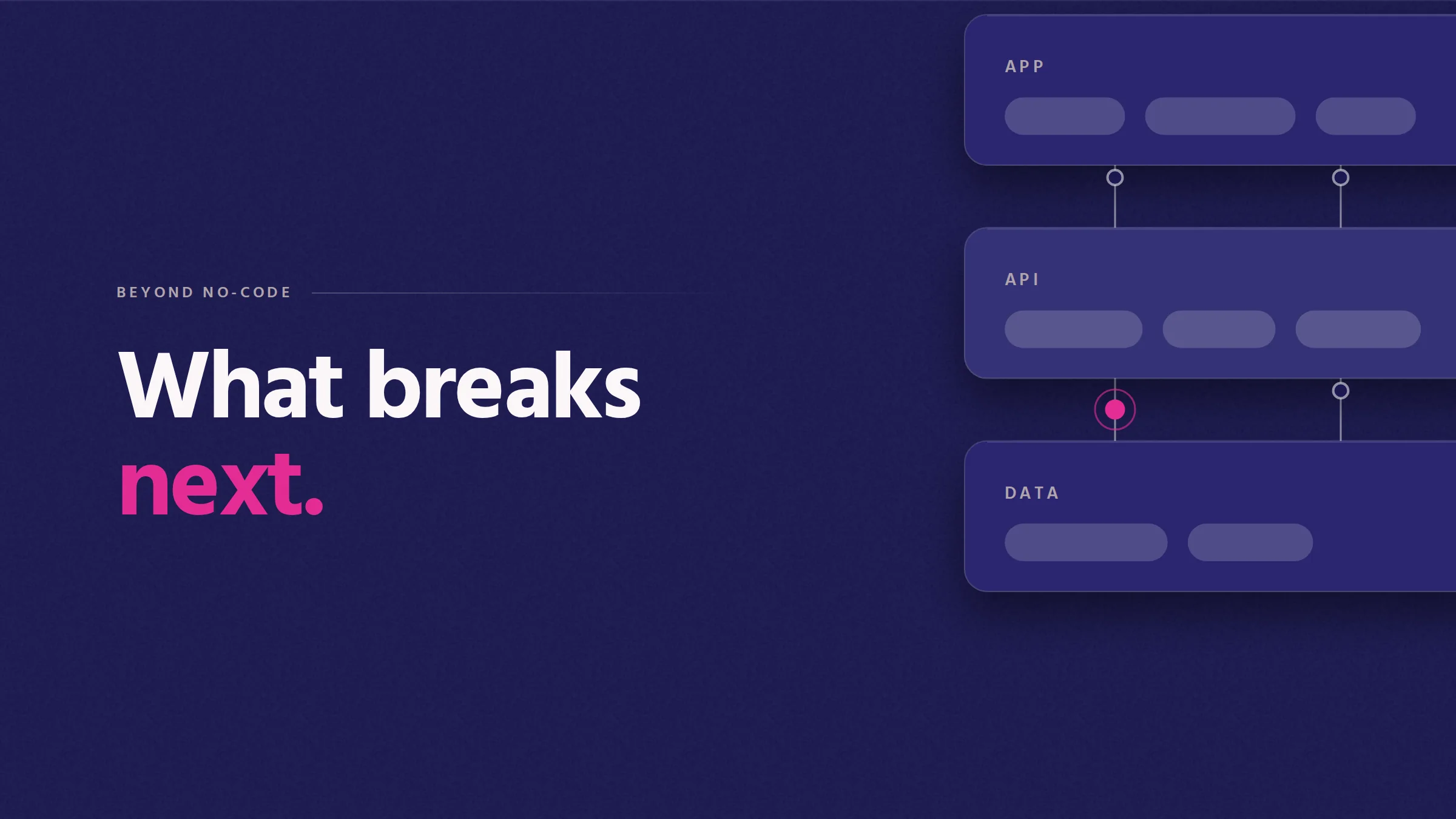
Once you decide to go beyond no-code, you need an architecture that supports growth. Here’s how to structure it right.
Database bottlenecks can cripple your app as it grows. Optimising your database setup can enhance performance and reliability. Imagine upgrading from a two-lane road to a highway; traffic flows smoother, reducing delays. Implementing proper indexing, caching, and query optimisation are just a few tactics. This might sound technical, but getting it right is crucial for smooth scaling.
Integrating AI into your SaaS can set you apart. AI can automate tasks, deliver personalised experiences, and even predict user behaviour. The trick is to start small and expand as you see benefits. Think of AI like a helpful assistant; it learns and improves over time, adding value as it goes. For more on making this transition work, explore this guide on transitioning your AI MVP.
Scaling isn’t just about technology; it’s about cost-efficiency too. Optimising your cost to serve involves analysing both operational expenses and revenue streams. It’s like fine-tuning an engine for better mileage. By reducing wasteful spending and focusing on profitable features, you’ll stay financially healthy. Regular assessments and adjustments ensure you’re not over-investing in areas that don’t yield returns.
In conclusion, moving beyond no-code can feel daunting, but with the right strategy, it’s entirely manageable. The longer you wait, the more risks you take. Equip yourself with insights and partner with experts who’ve navigated this path before.
Book a free 30-minute call. We'll talk through what you're working on, what we'd do, and whether we should partner. No pitch deck, no PDF brochure.

Software that holds up under real use.

© 2026 Castle Digital Pty Ltd. All rights reserved.